
The Good Earth
By Pearl S. Buck
In this delightful process of re-reading novels that impacted me as a teenager I find myself constantly surprised and amazed. Great novels were a source of information and perspective for me as a serious boy seeking to become a man. The standards of maturity were extremely high. Most of the men of my father’s generations were WWII veterans, men who did not take life for granted but had a deep sense of the importance of the individual and the responsibilities of adulthood. Add to this societal perspective the impact of the Kingdom of God, of which we were a part and in which we possessed a destiny, the goal of adulthood was an ever-present one. Memory serves me with the realization that all my little-boy games involved pretending to be a man. In the teenage years, as hormones surged inside, prayers vibrated at home and in church, and the words of Truth in my Bible were systematically installed into my heart, life was a constant process of learning the rules and potentials of being a man, good man.

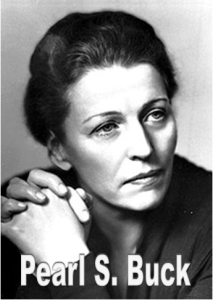
The books I read, both those assigned at school and those I found on my own in the Phillips County Library, contributed to this unofficial education. Among these books, The Good Earth holds a special place. At some point a boy must realize that this wide world contains cultures other than his own. It is hard to imagine a more distant culture than that of China, especially pre-communistic China. Pearl Buck was born in China to American missionaries, so I had two connections to her, America and the Church. A prolific writer, this novel brought her out of the obscurity of the mission field into international prominence. The story is of a pre-industrial farming couple, beginning on their wedding day, who are so fundamentally connected to the earth that if they wanted to eat, they had to raise the food. All the challenges of human life are present in their humble home. The story follows them all the way to old age bringing into focus all the stages of life and relationships that we all face. However, they live their lives without the truth of the Word of God as the foundation. At our church, the Great Commission of Jesus to tell the world about Him was a constant and powerful emphasis. In this story I could see what the absence of this truth was like. It is amazing that the author was a Christian missionary but there is only one scene where foreign missionaries appear briefly and that without effect. The undetailed pagan beliefs of the Chinese people provide little strength or direction to them. It is a curiosity to me that the result is a random life whose events, twists, turns, challenges and rewards seem to me, from this vantage point in my life, as a realization of today’s random view of life as a meaningless series of unrelated events. This is the dogma of the modern/postmodern age all around us today.
My study of the author and the book indicates that The Good Earth is credited with preparing America for WWII by revealing the commonalties of the Far Eastern cultures with those of us in the West. In the 1930s, Japan began its empirical quest by seeking to conquer China and this book helped the American public to respect their Far Eastern friends. Read more about this novel here: https://en.wikipedia.org/wiki/The_Good_Earth.
The 1937 Film
To a great extent the Hollywood of the 1930s depended on novels for their film stories. A leader in this approach was the head producer at MGM, Irving Thalberg, who used such literary sources to exalt MGM to the lead among the major studies. You will not find his name in the credits, a measure of humility rare in Hollywood, then as now. This was his last production and a tribute to him opens the film. The resultant recognition at the Academy Awards is most impressive. They used primarily actors who were not Chinese even though Pearl Buck and Irving Thalberg did not want this. Forgiving this, the film is an amazing epic and worth the viewing today.
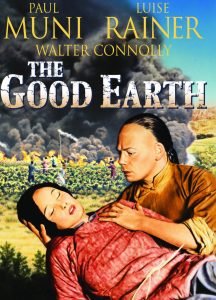
Read more about the film here: https://en.wikipedia.org/wiki/The_Good_Earth_(film)
Conclusion
This is a diverse world so each of us should live a life of deliberate exploration and discovery. In 1993, after more than 20 years of local leadership in music education and music ministry, I finally got to travel oversees in my own missionary work as a travelling teacher of and advocate for the Worship Arts. My heart is full of stories and impressions from these overseas adventures. Somewhere in my teen years the combination of a constant emphasis in our church and its culture on world missions and the impact of formal and personal studies of great novels set in other lands and times has helped me see the world, at least more of the world. I recommend this process.
Dr. Stephen Phifer

Leave a Reply